Your got-to source for fresh ideas, news, knowledge

May 31, 2019 Read
Four Essential Elements of a Successful Content Marketing Strategy Content marketing is more than just creating and distributing content across digital platforms. It involves producing relevant, engaging, and attractive content targeted at your audience to generate profitable results. A strategic content marketing approach boosts sales and improves your online reputation by delivering the right content to potential customers. Every digital business, regardless of size or type, needs a proper content marketing strategy to grow. This is why many businesses hire the best SEO writing services. India offers numerous content writing companies, and our organization has established a strong reputation among them. 1. Set Up Your Brand Defining your brand and products clearly for your target audience is the first step in content marketing. Building a strong brand image requires understanding your current customers and identifying your potential audience. Knowing what your customers seek helps us create relevant content. We also analyze your competitors, their marketing strategies, and what makes them successful. This allows us to highlight your unique strengths and differentiate your brand through content. Establishing your brand identity is the foundation of an effective content marketing strategy. 2. Define Your Owned Media Value Proposition Owned media includes digital channels controlled by your company, such as social media platforms and your website. Defining a value proposition for these channels ensures your content stands out and resonates with your audience. We research your target audience and analyze competitors to create a content strategy tailored to your niche. This approach positions your brand as an authority while delivering credible, engaging content consistently. 3. Develop a Strong Business Case Creating content that provides value to your audience is crucial. To do this effectively, you must have a clear understanding of your business goals. A documented business case outlines the benefits, costs, and risks of implementing a content marketing strategy. Our team, as a leading SEO writing service in India, ensures every content plan aligns with your goals. Understanding your objectives allows us to craft content that supports growth and strengthens your brand. 4. Create a Strategic Plan A strategic plan defines how content will be delivered and how targeted results will be achieved. Our experts design long-term strategies that include auditing existing content, setting goals, identifying target audiences, and creating editorial plans. We also define content purposes, plan distribution, and analyze performance to ensure maximum impact. Following these steps helps brand your business globally while spreading awareness effectively. Looking for experts who can develop content incorporating these four essential elements? Hih7 Webtech is your ideal partner for professional content marketing services.

May 24, 2019 Read
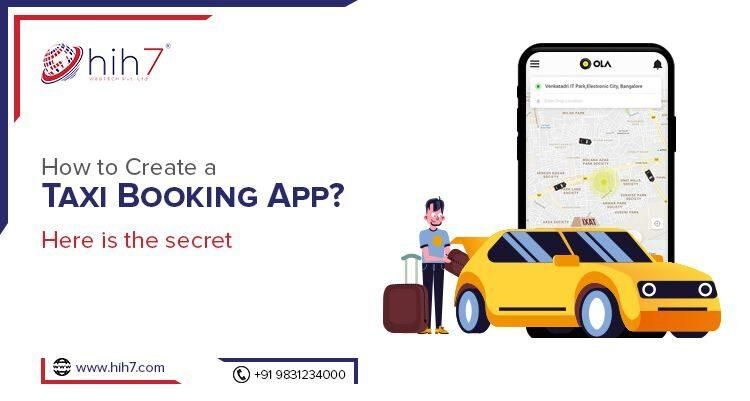
How to Create a Taxi Booking Application: A Complete Guide Cabs mean a lot to people waiting by the roadside in scorching heat, heavy rain, or urgent situations. For them, a cab booking app feels like a blessing. Thanks to taxi booking applications, travelling to any destination has become easier than ever. Do you own a taxi business? Do you want to bring your services to customers’ fingertips? The best way is to create a taxi booking application. A professional app is convenient for passengers, drivers, and admins. However, many marketers fail to succeed because they don’t fully understand how these applications work. Don’t worry. In this blog, we’ll explain the essential features of a custom taxi booking app so you can build one successfully. Three Pillars of a Taxi Booking App A taxi booking app stands on three pillars: Passenger App Driver App Admin App Each pillar has its own features and purpose. Let’s break them down. Features of the Passenger App The passenger app helps users book rides, track taxis, and make payments. It must have a simple and user-friendly interface. 1. Sign Up/Login Passengers can register or log in to the app using email or social media accounts. This feature ensures a smooth onboarding experience. 2. Tracking Passengers can track their cab’s route in real time. This feature assures them that the cab is on its way and following the correct path. 3. Fare Calculator A fare calculator lets riders estimate the cost of a trip. The app calculates the fare based on distance, ride type, car model, traffic, and weather. 4. Payment Options Passengers can pay through credit card, app wallet, or cash. Offering multiple options makes transactions flexible and convenient. 5. Ratings and Reviews Passengers can rate drivers and leave reviews. These insights help drivers improve and allow admins to monitor service quality. Features of the Driver App The driver app works similarly to the passenger app but with a few differences. 1. Registration Drivers register by creating a profile with details such as license, experience, and work schedule. 2. Booking Management Drivers can accept or reject ride requests depending on the customer’s location, destination, or availability. 3. Navigation GPS or Google Maps integration helps drivers navigate routes easily. 4. Reports Drivers receive detailed daily reports that include ride history, earnings, idle time, and customer feedback. Features of the Admin App The admin app is the backbone of the taxi booking system. It manages operations and ensures everything runs smoothly. 1. Vehicle Management Admins can monitor and manage vehicles in real time. They know which taxis are available and which are already booked.

May 21, 2019 Read
4 Social Media Metrics You Should Track for Better Results Social media has become one of the most powerful pillars of digital marketing. But here’s the question: how do you know if your efforts are actually working? Without tracking the right social media metrics, it’s almost impossible to measure ROI or judge whether your strategy is hitting the mark. Simply having a social media presence won’t give you an edge. You need a well-structured plan backed by analytics. Tracking the right metrics helps you understand performance, identify gaps, and refine your campaigns for maximum impact. In this blog, let’s explore the four most important social media metrics you should consider for better results. 1. Engagement Rate Engagement rate refers to the number of actions (likes, comments, shares) your post receives compared to your total followers. It’s one of the best ways to measure how effectively your content connects with the audience. A low engagement rate usually signals that your followers are not connecting with your posts. To boost engagement, focus on creating content that is interactive, valuable, and exciting enough to spark conversations and brand loyalty. 2. Impressions and Reach Impressions and reach may sound similar, but reveal different insights. Impressions show how many times your content was displayed on screens, while reach reflects the number of unique people who saw it. Both metrics are vital because they highlight how well your content spreads and how visible your brand is. Tracking them helps you identify which types of posts resonate most with your audience. By leveraging professional digital marketing services, you can maximise both reach and impressions strategically. 3. Account Activity Account activity covers the actions your audience takes on your page — clicks, profile visits, follows, calls, or bookings. Monitoring these activities shows how your content influences real actions. For example, if a restaurant posts a picture of a delicious meal with a call-to-action (CTA) and sees increased profile visits, it’s clear the audience responds positively. This kind of analysis helps refine content strategy and encourages more meaningful engagement. 4. Shares Shares are one of the strongest indicators of brand advocacy. When followers share your content with their networks, they essentially endorse your brand. This not only expands brand awareness but also builds trust and loyalty. A high share rate means your content resonates deeply, making your audience willing to promote it on your behalf. That’s the ultimate goal of social media marketing — turning followers into advocates. Final Thoughts These four metrics — engagement rate, impressions and reach, account activity, and shares — give you a clear picture of how your social media strategy is performing. By tracking and analysing them, you can make smarter decisions, refine your campaigns, and achieve stronger results. At Hih7 Webtech, we help businesses unlock the full potential of social media marketing with data-driven strategies. Our expert team ensures your campaigns not only reach the right audience but also drive measurable growth.

May 16, 2019 Read
Worried About Your Bounce Rates? Here’s How to Fix It If your website has a high bounce rate and most users leave on the first page, you won’t get a chance to convert them into customers. Struggling to increase website traffic, generate leads, and gain more clients? A high bounce rate might be the reason behind it. In simpler words, when visitors exit your landing page quickly without engaging further, it leads to a high bounce rate. The key question is: do you have this problem? If yes, don’t worry — in this blog, we’ll share practical tips to reduce bounce rate and improve conversions. Before diving into solutions, let’s first understand what bounce rate really means. An Insight into Bounce Rate Bounce rate is the percentage of users who land on your website but leave without visiting a second page. A high bounce rate suggests your site failed to convince visitors to stay or take action. Now, users may exit naturally — that’s normal behavior. But here’s the catch: there’s a difference between a good bounce rate and a bad one. Generally, a bounce rate between 50%–80% is considered healthy. Anything consistently higher could signal a problem. And that’s exactly what you should worry about. Hih7 Webtech can help you tackle this issue and improve your website results. As a professional website development firm, we have the expertise to guide you with the right solutions. Useful Tips to Reduce Bounce Rate 1. Optimize Page Load Time Many assume bounce rate is caused by poor content. But the problem often starts before visitors even read a word. Slow page loading frustrates users and drives them away. From a user’s perspective, nothing is worse than waiting too long for a site to open. 2. Improve Content Readability Poor readability is another reason why visitors leave quickly. Large blocks of text overwhelm readers and reduce engagement. On the other hand, well-structured, scannable content makes users stay longer. If you struggle with creating reader-friendly content, you can rely on expert SEO content writing services like ours. We know how to keep your audience hooked and reduce bounce rate effectively. 3. Enhance User Experience User experience (UX) covers everything — from navigation to design to overall ease of use. A positive UX means visitors find your website smooth, intuitive, and enjoyable. One key step is ensuring your website looks and functions perfectly across all devices. That’s why a responsive design is essential. Our Responsive Website Development in Kolkata ensures your site delivers a seamless experience everywhere. 4. Use High-Quality Images Images play a big role in holding user attention. Attractive visuals can make visitors stay longer and engage more with your content. Stock photography or professional photos can work well to enrich your design. The longer visitors stay, the more opportunities you have to convert them into customers.

May 7, 2019 Read
How Homepage Design Defines Your Business Destiny Do you know that your homepage plays a pivotal role in defining your business destiny? Some might argue that a business’s success depends solely on the efficiency and skills of the people driving it. Of course, skills matter. But overlooking homepage design is a mistake you cannot afford to make. A well-structured homepage has a huge impact on business growth. Since users often land on your homepage first, poor design can cause them to leave without converting. And fewer conversions directly affect your bottom line. Let’s dive into why homepage design matters the most. 1. Branding of Your Business When setting up a business online, branding is often the top priority. A homepage is not just about visuals; it should reflect your brand image, mission, and objectives. An ideal web design company does more than create attractive pages — it strengthens your brand identity. Choosing the right colors, designing a meaningful logo, and including relevant content are essential for creating a homepage that builds trust and recognition. 2. Attracting High-Potential Visitors You must have heard the phrase: “First impression is the last impression.” When it comes to homepage design, this couldn’t be more true. Think of your homepage like product packaging — the better it looks, the more attention it attracts. A visually appealing homepage increases traffic and excites visitors to connect with your brand. 3. Boosting Conversion Rate Conversion rate refers to the number of visitors who become customers. Since the homepage often acts as the landing page, its design directly influences conversions. A weak homepage design fails to guide visitors to other pages or encourage them to take action. If your current design isn’t working, it’s time to redesign and include engaging elements like strong CTAs, clear navigation, and compelling visuals. A professional branding and web design agency can help create a homepage that converts. 4. Improving Google Rankings Your homepage should be SEO-friendly to rank higher on search engines. Since it often doubles as a landing page, optimizing it with keywords, fast load speed, and clean code is crucial. A homepage that ranks well ensures visibility, attracts traffic, and builds a strong online presence. Tips for Creating an Effective Homepage Write a strong and simple headline. Avoid complex design elements or overwhelming content. Use clear and significant CTAs. Choose trendy colors and readable fonts. Highlight offers above the fold. Final Thoughts Not every homepage serves its purpose equally well. But with the right design strategy, you can create one that engages, converts, and ranks. If you want the best homepage design for your business website, Hih7 Webtech is here to help. As a leading branding and design agency, we deliver comprehensive services at affordable rates.

April 18, 2019 Read
Joomla or WordPress: Which CMS is Better for Your Website? Choosing a content management system (CMS) for your website can be as critical as decisions in your startup. A single wrong choice can significantly impact your website’s performance. While many CMS platforms exist, each with its own pros and cons, this blog focuses on two popular options: WordPress and Joomla. Both platforms are renowned for their features. Their ease of use, customization options, versatile templates, and multiple plugins have made them highly popular. However, they also come with some drawbacks. Confused about which one to choose? Let’s simplify it for you. 1. Search Engine Optimization (SEO) When comparing SEO capabilities, Joomla requires users to manually set meta descriptions and keywords for each article. WordPress, on the other hand, offers plugins like Yoast SEO, which provide a comprehensive SEO analysis using a traffic light system (red, yellow, green) and guides users to improve their scores. Hence, in terms of SEO efficiency, WordPress outperforms Joomla. 2. Security Security is crucial in website development. A less secure website exposes sensitive data to hackers. WordPress maintains strong security standards through plugins and compatible themes, but it does not enforce features like SSL or Two-Factor Authentication (2FA) by default. Joomla includes forced SSL connections, 2FA, and a set of security extensions. Its developers maintain a list of extensions with known vulnerabilities. Overall, Joomla offers a more structured built-in security approach, whereas WordPress relies on user-selected plugins. 3. Customization Opportunities Both WordPress and Joomla offer plugins and extensions for customization. WordPress plugins, however, provide more options and ease of use. For example, the Yoast SEO plugin in WordPress offers better functionality compared to Joomla’s EFSEO plugin. With high-quality WordPress themes and a broad support system, users can enjoy a superior experience. If you need a responsive website development platform, WordPress is often the better choice. 4. Content Management Both platforms are open-source content management systems capable of managing all your digital content. WordPress is widely known for blogging but is also highly suitable for professional website development. Joomla offers excellent documentation but has a steeper learning curve. If you prefer simplicity and ease of use, WordPress allows faster website creation and content management without sacrificing functionality. Conclusion While Joomla offers flexibility and extensive customization without relying on many plugins, WordPress excels in SEO, security options, and user-friendliness. Its plugins, themes, and community support make it the preferred platform for many businesses. Planning a professional website development project? Contact Hih7 Webtech to discuss your needs. We turn your ideas into effective, secure, and user-friendly websites that accelerate your digital presence.

April 11, 2019 Read
7 Mobile App Development Guidelines for Startups In 2019, startups must focus on innovation and uniqueness. Gone are the days when a website alone determined business success. Today, mobile app development plays a pivotal role in driving business growth. There are approximately 8 million apps on Google Play and the App Store, but only 2-3% achieve significant success. To help your startup create a top-performing mobile app, here are seven essential guidelines. 1. Study Your Users’ Likes and Dislikes Understanding user preferences is critical. Apps with high ratings, more likes, and fewer dislikes naturally attract users. Conduct research to determine what engages your audience, and work with a best mobile app development company to implement features that truly pique interest. 2. Choose the Right Features After identifying user preferences, select features that enhance app functionality and appeal. Consider the target platform, specifications, and user experience. Useful, intuitive features increase engagement and retention, attracting more users to your mobile app. 3. Offer a User-Friendly Offline Experience Offline functionality allows users to browse the app without an internet connection. This trend is increasingly popular and improves accessibility, making your app more appealing to a wider audience. 4. Keep Apps Simple Yet Professional Smartphones are used by people of all ages. Design your app to be simple, intuitive, and professional to expand reach and promote your business globally. 5. Limit Ads and Banners While ads and banners promote your brand, excessive use can annoy users and lead to app abandonment. Set boundaries to ensure digital promotions enhance rather than disrupt user experience. 6. Use Grid-Based Designs Grid-based layouts maintain consistency across different app pages, ensuring a professional and uniform appearance that enhances user experience. 7. Make Your App SEO and ASO Friendly Optimize your mobile app for both search engines (SEO) and app stores (ASO). This strategy boosts visibility, brand credibility, and user acquisition in a competitive digital market. Conclusion A successful mobile app reduces user effort, saves time, and streamlines processes. By following these seven guidelines, you can develop an app that engages users and drives business growth. If your app lacks these features, it’s time to consult a professional mobile app development company. Take your time to plan carefully—well-executed apps lead to higher productivity and success. Contact expert developers to bring your ideas to life. Related Blog: Do you Know How to Create Your Own Business Mobile App? Know the Right Ways Here

April 5, 2019 Read
Should you invest in SEO or PPC? This debate has persisted for years, and many marketers struggle to decide where to allocate their budget. Is it better to reach the top through a pay-per-click (PPC) campaign or rely on organic search engine optimization (SEO)? Understanding the difference between the two is crucial for making an informed decision. Learning the pros and cons of both strategies will help you make better investment choices and maximize your ROI. SEO: Organic Search Engine Optimization SEO, also known as “organic” or “natural” lead generation, optimizes web pages to improve search engine rankings. While SEO evolves with industry trends and Google algorithm updates, its primary goal remains boosting visibility and traffic. For best results, it is recommended to hire professional digital marketing services. Advantages of SEO 1. Cost-Effective: SEO does not require large upfront payments. Unlike PPC, which incurs ongoing costs, SEO provides a sustainable way to attract traffic. 2. Brand Awareness: Targeted SEO strategies increase your brand’s visibility, promoting awareness organically and cost-effectively. 3. Stable Rankings: Once achieved, SEO rankings remain stable compared to PPC positions, which fluctuate based on competitor bids. Disadvantages of SEO 1. Slow Results: SEO requires patience. Unlike PPC, results take time, and success develops gradually. 2. Continuous Effort: SEO is never truly “finished.” Ongoing optimization ensures that your rankings remain effective and competitive. SEO works best when combined with blogging, social media, and video marketing to generate quality links and drive traffic. PPC: Pay-Per-Click Advertising PPC involves paying for high search engine visibility by bidding on keywords. Unlike SEO, it provides immediate traffic and measurable results. Let’s explore its advantages and drawbacks. Advantages of PPC 1. Immediate Results: PPC delivers instant traffic, clicks, and conversions, unlike SEO, which requires months to show results. 2. Flexible Budgeting: PPC allows you to scale your campaigns according to your budget and goals. More investment can result in higher visibility and leads. PPC operates independently of search engine algorithms and relies entirely on bidding strategies. Disadvantages of PPC 1. Requires Payment: PPC works only while you invest in it. Once payments stop, traffic and leads cease immediately. 2. Temporary Impact: PPC campaigns are effective only during their active period. If funding or management lapses, the campaign stops delivering results. Conclusion Choosing between SEO and PPC depends on your goals. SEO is ideal for long-term brand credibility and sustainable ROI, while PPC provides quick results and flexible control. Many businesses benefit from a combination of both strategies. Hiring professional SEO and digital marketing services ensures you maximize the benefits of both approaches and grow your business effectively.

March 28, 2019 Read
Before moving on to the design solutions in virtual reality, it is important to know what VR or Virtual Reality actually means to you. Virtual Reality is a technology that produces realistic sounds, images, and other sensations. It is a dynamic way to simulate the user’s presence in an imaginary environment using a VR headset. Would you like to design for such an environment – the environment that is technically called as Virtual Reality! If yes, make sure you are utilizing the best practices. Designing for virtual reality does not mean transferring 2D practices to 3D. It is basically finding a new parameter. Custom logo designers or the graphic designers who love to design for VR always keep this in mind before building their design. 2019 has come up with some best practices for VR designs. Let us find out what they are. 1. Semantic and Responsive Gestures: VR designs don’t possess the luxury of different buttons that provide different actions. Unlike other designs where you can point and click with your mouse, most controls should be gestures that are existing within the VR environment. These gesture controls can be categorized into two groups. Semantic and Responsive. Semantic gestures are defined as the common movements that we are quite familiar in the real-time environment. For example, walking, craning, etc. Responsive gestures are the movements that can interact with the environment. For example, picking things, pushing buttons, etc. Relative to the semantic gestures, designing responsive gestures are harder. But both of these elements are worth to be included in your VR design. 2. Distinct Signals based on Reality: This is another challenge for the VR designers of branding and design agency while creating virtual interaction. It is the work of the designers to give them cues based on the real world. Say, for instance, a big shiny doorknob. This denotes a door or travel point. Such buttons are highly responsive and certainly excite the visitors to interact, rather than tapping like a simple button. 3. Create Distance: Creating distance in interaction is something that creates one of the most exciting challenges for the designers. Be it a custom logo design or a graphic design based on VR, you should be careful with the distance. Let us define this with an example. There is a wide difference between a real offline store and a virtual online store. In the real store, you get to find the items in large open format, in most of the departmental stars. Whereas, in VR online stores you are providing different e-commerce categories for your different relevant products. These are basically the images of the items that are presented in such a way that they look real and seek the attention of the visitors. VR stores, especially when it is an e-commerce store the user get the opportunity to make any purchase, at any time they want, without any restrictions. 4. Concave Text and Images: VR text or images should include a slightly curved or concave effect. This creates the reality in a virtual platform. 5. Speakers vs headphones: In the audio-visual category, speakers are best for audio immersion since you have the opportunity to change the direction of the sound. While headphones limit this advantage. Hence, if you are developing an audio-visual design, make sure the VR designer of a branding and design agency is using the speakers to create a realistic mood. 6. Human Moves in Arcs: In case, if you are about to create a human figure in VR platform, then ensure that the body movements resemble exactly that in reality. This defines the movements should follow a pattern of an arc, instead of just straight lines. This is how virtual reality design exists. 7. Add Visual Effects to Communicate Depth and Space: VR is not about 3D, it still relies on a 2D display model. Hence, spatial relations really becomes challenging for designers. However, the best thing is that designers can incorporate a lot of traditional visual effects to establish space and distance in a better way. Talk to your branding and design agency and make sure your designs are included with some classic techniques like isometrics, lighting, shadows, and 3D spaces. Hope these design principles will help you to create the most impressive VR design. Reaching the bottom line, the limitations of VR with respect to the previous years are becoming less and at the same time, it has become a challenge for the designers to create a new frontline. It’s difficult but not impossible. There are boundless opportunities and you have to be smart enough to set off with your design. Are you planning to incorporate your website with such a VR design? If yes, then we guess a branding and design agency in India may soothe your concern. You may get in touch with our design professionals of Hih7 Webtech. They are efficient enough to pen down your thoughts into creativity and bring out the most impressive design with respect to your demand. Reach our one-stop station and get your work done.

March 22, 2019 Read
Any business who wants to create brand visibility over the web should avail the best digital marketing services. However, there are many businesses who hesitate to spend extra funds on the digital marketing service providing companies without any assurance. Some even find these services to be very expensive. Whoa, do you possess the same mentality? If yes then, of course, this blog will turn out to be a diamond for you.It might be quite surprising for you, but digital marketing involves some cost-effective strategies that are substantial to create an online presence and simultaneously allow the business to gain more traffic to the website. With the help of different social media platforms and other digital mediums, subtle digital marketing strategies ensure to create a noteworthy difference in your organization’s marketability and profitability. Here are the budget-friendly digital marketing strategies that can be implemented in a business. 1. Email Newsletter: This is what is known as email marketing. Among other marketing strategies, email marketing is considered the most cost-effective and powerful technique for online marketers. Emails are the best way to build a relationship over time, increase credibility, and acquire direct access to your targets in the most affordable way. Due to its numerous benefits, it is believed that this should be the first priority or the first step for the many marketers towards digital marketing. Set up an account with an email provider, create a sign-up form on your site and offer a lead magnet such as ebook, free course and so on. This will encourage the visitors to sign up your list. Once you have the list you are ready to connect with them, share updates, offers and many more. 2. Blogging: Starting a business blog is very easy and yes, very economical. However, many businesses still fail to achieve them right. Content marketing or SEO content writing services play a vital role in digital marketing and so are business blogs. These blogs allow marketers to generate more traffic on your site. They provide updates for every new product or service, provide value, describe your expertise, create a brand voice, and so on. This with the help of SEO attract more visitor and hold then back turning them into potential customers. Such a digital marketing service really is very beneficial and cost-effective. Isn’t it? 3. Social Media: Social media contributes a lot in flourishing the online venture. Platforms like Facebook, Twitter, and LinkedIn serve the best online media to promote a business channel. Create an account in these social media platforms are free. Hence, you won’t have to pay any single amount for that. Make your time and create an account for yourself. Having an online presence and sharing updates on different platforms are essential in enhancing the conversion rate. For better outcomes, you can hire the digital marketing services and outsource the task. 4. Build Links: SEO is the key feature of digital marketing practices. From sharing content on social media to publishing a blog in a relevant site all fall under SEO. However, another most important strategy that SEO offers is the building of backlinks. Hiring an SEO provider or reach a digital marketing service providing company for this. This link-building strategy is again a profitable one. 5. Remarketing Campaign: Another digital marketing strategy that is waiting on your way is the remarketing campaign. Now, what’s that? It is basically an advertisement of your brand to the people who have already visited your website and encourage them to make their purchase again, simply by providing regular updates about the latest inclusion. When a visitor land on your website, you can load cookies onto their respective browsers. And when they depart from your site and scroll their social media accounts or other websites, through this strategy you can reach them by running targeted ads. This to some extent is affordable. As you are paying only when someone clicks on your ad and notify them back with a special offer or remind them about the products they are actually interested in. No doubt, it is effective and affordable. Thousands of marketers are using this technique to increase their sales and for better ROI. These are just a few popular techniques that can easily be implemented in a business. However, there are many more strategies as well that can drive your business on a productive path. Well, reaching the bottom line, digital marketing is rich with multiple benefits. It provides the global reach, establishes brand credibility, improves conversion rates, generates better ROI and better engagement. And above all, you can get all these without spending extravagantly on resources. So, are you excited to hire digital marketing services from a professional IT solution provider? If yes then Hih7 Webtech can be one of the most reliable options. Avail our services for better consequences. Related Blog: 9 Latest Digital Marketing Trends that You Must Not Miss in 2019